Waterfowl
 Turkey
 Apparel


Duck Hunting Gear Checklist: What to Bring
The short answer: For a duck hunt you need a license and stamps, a plugged shotgun with nontoxic shells, decoys and calls, waders, layered clothing for the forecast, and a blind bag with the small things that end a hunt early when you forget them. The checklist below covers each one.
Most missed mornings don't come from a bad spread. They come from a forgotten stamp, a dead headlamp or gloves left on the kitchen counter. Use this list the night before, pack by category, and check the forecast last so your layers match the morning.
Licenses and regulations
- State hunting license, plus any state waterfowl stamp your state requires
- Federal Duck Stamp, signed, if you're 16 or older
- HIP registration for the state you're hunting
- Your state's current waterfowl regulations: season dates, daily limits and shooting hours
Rules change by state and by season. Check your state wildlife agency's regulations before every season.
Shotgun and shells
- Shotgun, plugged to hold no more than three shells
- Nontoxic shot, which is required for waterfowl. Lead isn't allowed.
- The right choke tube for your shells and distances, plus a choke wrench
- A gun sleeve for the ride and the boat. Our waxed canvas sleeves shed water, and the padded version protects against rough rides into the field.
Decoys, calls and concealment
- Decoys and a decoy bag, with weights and line
- Calls on a lanyard, plus a spare reed or a backup call
- A jerk cord or motion decoy, where legal
- A layout blind, boat blind or natural cover, depending on where you hunt
- Face cover: a camo mask or neck gaiter
Waders and boots
- Breathable chest waders for timber and marsh, or wading pants for shallow water
- A wader belt, cinched every time you wade
- Rubber boots for field hunts and the walk in, like the Scout Deck Boot, or a Floodline Fahrenheit Boot for hard cold
Choosing waders? Read How to Choose the Best Duck Hunting Waders.
Clothing, from the skin out
- Base layer: merino wool top and bottom, such as the Merino Mock Neck and Merino Bottom
- Under the waders: a fleece wader pant with stirrups, like the Sherpa Fleece Wader Pant
- Mid layer: a fleece such as the Sixty Series Half Zip with Hood, or the Over/Under Jacket, which puts insulation above the wader line and less bulk below it
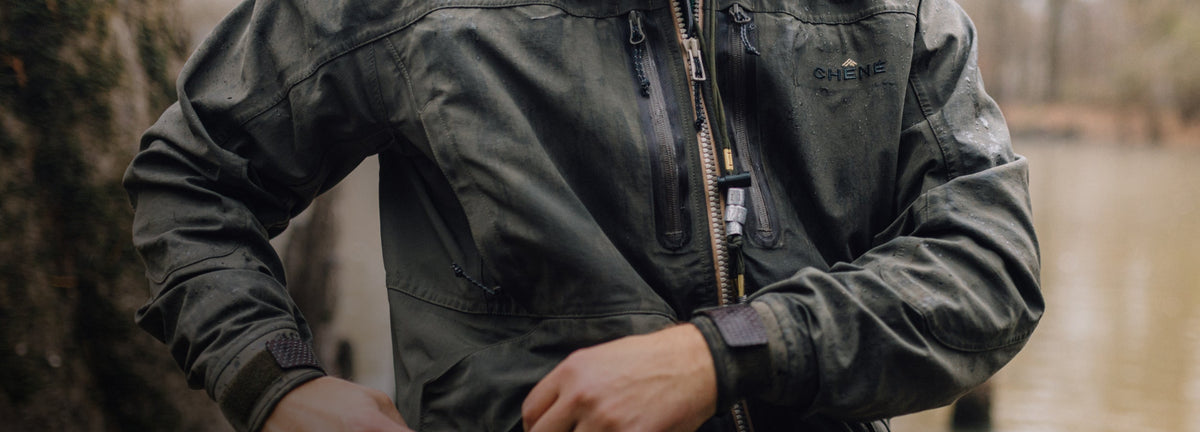
- Outer layer: a waterproof shell like the Hydro-Lok Shell Jacket for wind and rain, or the Hydro-Lok Insulated Jacket when rain and cold come together
- Socks: alpaca or merino wool, plus a dry spare pair
For layering by temperature, see What to Wear Duck Hunting and What to Wear Under Waders.
Hands, head and neck
- Gloves for shooting, like the Izembek Glove, which keeps enough dexterity to load a third shell
- Waterproof gloves for setting decoys, like the Hydro-Lok Insulated Glove
- A warm hat, like the Wool Duck Bill Beanie, whose brim keeps rain and snow off your face
- A Sherpa Fleece Neck Gaiter for mornings that start with busting ice
The blind bag
A blind bag holds everything that isn't on your body or in the boat. The Waxed Canvas Timber Bag has pockets for everything from spinner wings to truck keys. Pack it with:
- Extra shells, kept dry
- Headlamp with fresh batteries
- Knife or multi-tool
- Small first aid kit
- Hand warmers
- Phone in a waterproof case, and a battery pack
- Spare gloves
- Water, coffee and snacks
- Game strap
- Shooting glasses and ear protection
- A trash bag for spent hulls
Boat and safety
- A life jacket for everyone aboard
- Navigation lights, a throw rope and a bilge pump or bailer
- Shear pins and basic tools for the motor
- A dry bag with a full change of clothes
- Someone at home who knows where you're hunting and when you'll be back
For the dog
- A neoprene dog vest for cold water
- A dog stand or platform in flooded timber
- Water, a bowl and a towel for the ride home
Hunting geese in the field
Field hunts for geese swap the boat and the waders for a layout blind and dry ground. Add field decoys, flagging gear and a ground-level cushion. Waterproof bibs, like the Hydro-Lok Field Bib, keep you dry lying in wet stubble, and rubber boots handle the walk in.
Gear for young hunters
Kids need the same basics in their size. The Youth 2S Wader, Youth Hydro-Lok Shell Jacket and Youth Hydro-Lok Wool-Lined Glove cover the wet and cold. Our Youth Wader Program lets hunters 14 and under trade up a wader size as they grow.
After the hunt
- Rinse mud off your waders and hang them to dry, out of direct sunlight
- Keep a Wader Care Kit on hand for water repellency, boots and zippers
- A cooler for birds
- Restock the blind bag before the next morning
Frequently asked questions
What gear do I need to start duck hunting?
A license, a Federal Duck Stamp if you're 16 or older, HIP registration, a shotgun plugged to three shells, nontoxic shells, waders, warm layers and a call. You can start with a small decoy spread and add to it.
Do I need a duck stamp?
In the U.S., waterfowl hunters 16 and older need a signed Federal Duck Stamp. Many states also require a state waterfowl stamp. Check your state's regulations.
What should be in a duck hunting blind bag?
Extra shells, a headlamp, a knife, a first aid kit, hand warmers, a phone in a waterproof case, spare gloves, water and snacks, a game strap, and eye and ear protection.
What's different about goose hunting gear?
Goose hunts are often in dry fields, so you'll use a layout blind, field decoys and waterproof bibs instead of waders and a boat.